CH101 - The Fourth Century
The Church Established, 303 - 400 A.D.Outline
Diocletian and Church Growth
The "Great" Persecution under Diocletian
Constantine becomes the Emperor
Initial Heresies (Donatus - Arius)
The Faith of Constantine
The Council of Nicea, 325AD
The Nicean Creed
Post-Nicean History
Christianity - Post Nicea
These pages are coming soon:
- Fourth Century Orthodoxy
- Death of Constantine
- Julian the Apostate
- Jovian-Valentinian and Valens
- Christianity becomes the Official Religion
The Council of Nicea - 325 AD
There are many erroneous things said and written about the famous Council of Nicea. For example, it was not:
- the beginning of the "Catholic Church"
- when Christianity decided Jesus was divine
- when the New Testament was made official
There was not exactly a vote on the trinity, or even the divinity of Jesus (it was much more technical than this). No vote on the official biblical text. No vote on gnostic gospels. Christianity was not made the official religion. [You can read about the development of the trinity to see how the divinity of Jesus was a settled issue in early Christianity prior to the Council of Nicea in 325 AD]
The goal here is to report what the sources tell us about this historic council.
Our historical voices for most of our knowledge of this council are Eusebius of Caesarea, Socrates Scholasticus, Sozomen, Rufinus and Theodoret (other than Eusebius, these men lived and wrote in the fifth century). Eusebius was seen as a friend of Constantine and thus not seen as 100% objective in his reporting, however he cites letters written by the Emperor that have been authenticated by papyrus discoveries. These archeological finds have restored some measure of credibility to the reporting of Eusebius. Socrates gives us many details in his own Church History volume; Sozomen, Rufinus and Theodoret rely on Socrates - there is likely to be some exaggeration, but unless there is good evidence to the contrary, it is my position that we should basically trust these historians.
In 324 AD the temporary truce between Licinius and Constantine came to an end. Constantine defeated Licinius in battle and became the sole ruler of the Roman Empire. Almost immediately Constantine began receiving reports that the bishops and churches in Egypt were in disarray. He had been told about the conflict between Alexander, the bishop of Alexandria, and Arius, a presbyter.
Constantine had begun to see himself as something like Plato's philosopher-King, the emperor who was also the spiritual leader. As the Augustus he was also taking on the official role of Pontifex Maximus, the High Priest of the empire. Sacrifice to the Roman gods was always seen as something to ensure the peace of Rome and Constantine had shown himself to be a religious man prior to his "conversion." Many critics have attacked Constantine's "conversion" as false due to his actions as Pontifex Maximus, but this was part of his responsibility as the Augustus Emperor of Rome.
We learn from some of his letters that after he claimed to have become a Christian he felt a serious responsibility to present the Church as a unified force to the pagans of the empire. In his letters to Christian bishops he makes it clear that he feels personally accountable to God in this matter. In his opening address to the Council at Nicea Constantine referred to God using him to put away "the impious hostility of the tyrants," bringing peace to God's people. Now he finds that the very people of God are not in unity. He says that internal strife in God's Church "is far more evil and dangerous than any kind of war or conflict." Vita Const 3.12
Constantine had tried to help solve the Donatist crisis and now he was distressed with the Arian crisis in Egypt. He dispatched Hosius, a bishop from Spain, to try to reconcile Alexander and Arius. In addition, Constantine determined to call a "worldwide" council to bring peace to the Church.
Messengers were sent all around the empire, inviting (or directing) bishops to come to a monumental council. Initially the council was slated to be in Ancyra, but Constantine moved it to his summer retreat in Nicea. Around 220 bishops attended, mostly from the eastern churches. Only around eight officials came from western churches - Rome sent only two presbyters.
The council began with a solemn ceremony in the great hall. The bishops were all seated in rows of chairs lined along the walls. There was a throne at one end of the hall, obviously for emperor, and a small fire pit, like an altar, sitting in the middle of the hall. An attendant entered, then another, then a third. Then one of the attendants gave a sign and all of the bishops stood. Emperor Constantine entered the hall clothed in purple. A very tall man with a huge head, Constantine moved with the ease of an athlete-warrior. He walked with his gaze slightly downcast to the ground which seemed to indicate an imperial air combined with a kind of humility. Once Constantine reached his seat he looked around, wanting the bishops to be seated. The bishops motioned for the emperor to sit first, a show of respect. Finally, Constantine seated himself with the bishops following his lead.
A statement was read (perhaps written by emperor) welcoming the bishops and rejoicing that the empire had come to peace. Now it was the intention of the emperor that the Church of the Lord be filled with peace. Rufinus records that Constantine had an attendant bring in an armful of scrolls and letters sent to him from all over the empire. It was announced that these communications were letters of accusations and complaints sent by bishops against other bishops. Constantine then let the bishops know that he had not read any of them and instructed his attendant to burn them on the altar, saying that he wanted all grievances settled during their council.
As the council progressed it became obvious to the bishops that Constantine understood Greek. He nodded as bishops spoke and even interjected comments into the air from time to time. According to Socrates, Constantine chided bishop Acesius for his rigid stance (related to second repentance), saying "Place a ladder, Acesius, and climb alone into heaven." It impressed the bishops to see that the emperor was engaged and appeared to follow the various theological and doctrinal discussions.
Theological Debate
It is clear in retrospect that Constantine was more concerned with attaining peace and unity in the Church than he was with theology or doctrine. Three men who had been excommunicated in a previous smaller council, including Eusebius of Caesarea, were readmitted with little debate. These men had been disciplined for their views on the relationship of Jesus to the Father - the same issue which had driven Constantine to call the Council of Nicea to decide what to do with the views of Arius. Eusebius was allowed to read a simple baptismal formula for his defense which Constantine urged the bishops to accept without debate.
Despite the urging of the Emperor for peace, accusations were thrown about and Arius was called upon to present his views and defend himself. As Arius explained his position on the nature of Jesus some of the bishops actually plugged their ears, unwilling to listen. In the end a vote was taken to decide if Arius was to be allowed to remain in his position - it was a unanimous vote against Arius with two bishops abstaining. The views of Arius were condemned. It is important to realize that this vote was not a vote on the divinity of Jesus, or the trinity, but specifically on the views of Arius and whether or not he would be allowed to stay in his position.
I have read on some other web sites that Constantine "demanded" the bishops to draft a creed. This is not exactly the case. It was already becoming the tradition at such councils to draft canons (rules, or policy) and creedal formulas were already being used, different in each region. As we will see below, Constantine did get involved in the creed, but only on the single wording to be used for the nature of Jesus - it was a controversial term.
Constantine did introduce, argued for and eventually insisted that the term homoousias be used in a creedal formula from the council that would definitively state the universal position of the Church. Some have stated that Constantine pushed for this term being influenced by the pro-Origenists. It must be remembered that homoousias had been used some 70 years prior by Dionysius of Alexandria in his trinitarian debate against Dionysius of Rome. It was NOT a new term. The use of the term had been marginalized because it was not found in the NT scriptures. Lietzmann calls this "amateurish theology" on the part of the Emperor, but admits that the term had previously been employed not only by Dionysius, but by Paul of Samosata as well.
Here is the important thing to remember: the Church was attempting to bring clarity to the issue of exactly how the nature of Jesus was related to the nature of the Father. This had always been simply stated as in John's gospel, "In the beginning was the Word. The Word was with God and the Word was God" - Logos theology. The problem was always in the explanation. We have seen at various points how writers of the first few centuries had affirmed these concepts more simply: see the section on Ignatius of Antioch for a good example. When men like Paul of Samosata or Arius espoused anything that did not seem to fit the established understanding, others would argue against them and definitions were pushed further. One might wish that everything could be simple, but in the end the great thinkers of the Church were trying to understand and explain what has always been considered a mystery. How could God take on the form of a man...and die? For some it seems to go against logic.
In the end the teaching of Arius was condemned, a creed was drafted (with perhaps too much attention on the views of Arius), and some 20 canons were passed. Among the more important canons was an agreement of when to celebrate Easter and more regulations on how bishoprics were to operate.
Athanasius of Alexandria
Alexander, the bishop of Alexandria was in attendance and had brought with him a young man named Athanasius who served as his secretary. At this great council Athanasius is seen handling notes and conferring with Alexander. It is thought he was the son of a well-to-do family, but we cannot be sure. What we do know from Sozimus is that he was "well educated...versed in grammar and rhetoric" prior to becoming a bishop. (Soz. II,27)
Some have stated that Athanasius was a black man and that some of his detractors referred to him as "The Black Dwarf." I have demonstrated that there is no historical evidence for the nickname "The Black Dwarf."
We will see that Athanasius becomes an important defender of Nicean theology against the Arians. Although he is probably best known for standing against Arianism, his treatise Life of Anthony possibly had the greatest impact on Christianity. In this work Athanasius details the life of Anthony who walked away from all of his earthly possessions to live alone in the desert, devoted to a life of prayer, silence and contemplation. Thousands of young men (and many women) heard the call to the desert through this work and this represents the beginning of monasticism. We will pick up this story later.
The Date of Easter
When to celebrate Easter, the resurrection day of Jesus, had always been somewhat controversial. Eastern churches had always followed the Jewish calendar, celebrating on the Sunday following Passover. The Western churches followed the Roman calendar which could never be matched exactly with the Jewish calendar which added a lunar month every four years or so determined by the Sanhedrin. Thus, the Western church Easter celebration had a different cycle with fixed dates set by regional leadership. The canon from Nicea, pushed by Constantine, made it forbidden to "celebrate with the Jews," pointing to the undercurrent of anti-Jewish sentiment we have seen in earlier centuries.
Canons regarding bishoprics had already been given a good deal of attention. This issue had received attention at the Council of Arles (314 AD) and at almost every early council we have on record. Nicea continued this tradition. Indeed, with Meletius and Donatus appointing their own bishops and other contentious and dubious appointments, the "orthodox" bishops saw this as an important part of governing the growing church. Here is a sample of the Canons from the Council of Nicea in 325 AD:
Canon 5 - provinces should honor excommunications pronounced by other bishops in other provinces
Canon 6 - gives the bishops of Alexandria, Rome and Antioch authority over bishops in the greater region around their cities and in other local provinces
Canon 10 - no lapsed believer should be ordained
Canon 15 - ordained leaders shall not move from city to city on their own accord
Read all 20 canons from the Council of Nicea 325 AD.
The Nicean Council Closes
On July 25, 325 AD Constantine called for a fairly festive banquet to close the council. Constantine had already gifted several bishoprics with funds and buildings prior to Nicea, but now he showed more generosity, bestowing funds on many bishops in the great hall. Constantine went around the hall greeting bishops, kissing many on the very wounds that had been caused by Roman persecution. He gently kissed stubbed fingers that had been hacked off; he kissed empty eye sockets where eyes had been gouged out. He asked for bishops to remember him in prayer. He urged the bishops to retain and hold firmly to the peace that had been attained at their great council.
Though the emperor was filled with great optimism, many bishops were not as thrilled. A novice in the faith had pushed for a creed that had contained a key non-scriptural term and had not been well thought-out. It was also clear that the Church now was under a certain amount of governmental control. Where bishops had been excommunicated, the emperor had maneurvered to reverse those decisions, as with Eusebius. And now an excommunicated bishop could be exiled by the government. Mostly, however, bishops were thankful that their time of deadly persecution had come to an end. The theological issues addressed at Nicea were not over. In fact, even the situation with Arius would continue for another 60 years.
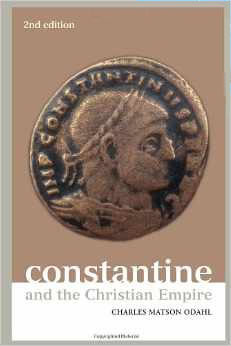
Numerous CH101 readers have written to me with questions and critical comments about what I have written regarding Emperor Constantine. There is a significant percentage of conservative Protestants who believe Christianity suffered greatly under Constantine. As a young man I was taught that the Catholic Church started with Constantine and was the beginning of Christianity losing its way.
One reader expressed it very close to how I learned it as a young man:
Emperor Constantine comes to Power
Emperor Constantine and Christian Faith
Emperor Constantine at the Council of Nicea
Emperor Constantine and Worship of the Sun (Sol Invictus)
Emperor Constantine and Christians in the Military
Emperor Constantine Against the Donatists

Questions, Comments or Criticisms:
You can send an email to directly to me Al Baker, CH101.
CH101 retains the right to edit and post comments/questions unless you specifically ask that your comments NOT be posted. Comments that are personal or private are never posted...only questions about Church History, the Bible, etc.
top of page |
go to page 4 - Constantine Comes to Power

ist Century Church History
The conversion of the apostle Paul
Early Church History of Galatians
James Just brother of Jesus in the Bible
1st Century Christian Church Struggles
Christian History - conversion Apostle Paul
Palestine - Philo, Josephus, Strabo, Aristotle
Apollos NT Hebrews in Ancient Rome
Apollos NT Hebrews in the Bible
Wine in Bible Alcoholic?
James the Just and Jesus in the Bible
The Apostolic Fathers
Ignatius of Antioch - Barnabas
The Shepherd of Hermas - Polycarp
Gnostics and Gnosticism - Marcion
Justin Martyr - Ireneaus of Lyons
Spirit of Martyrs - Second Repentance
Clement of Alexandria - Paidagogus-Stromateis
The New Testament Canon
The Apostles Creed and the Roman Creed
Second Century Apologists
New Testament Canon - 3rd Century
Severan Persecution - Clement, Origen of Alexandria
Origenist Controversy - First Principles - De Principii
Roman Persecution under Decian
Cyprian of Carthage North Africa
New Testament Canon - 3rd Century
Emperor Valerian Persecution
De Lapsis, On the Lapsed by Cyprian
Diocletian Tetrarchy - Church Growth
The Great Persecution of the Church
Constantine Becomes the Emperor
4th Century Heretics - Donatus and Arius
Constantine's Conversion and Christian Faith
The Council of Nicea 325AD
The Nicene Creed - Homoousias and Orthodoxy
The New Nicene Orthodoxy and Conflict
The Death of Constantine - Julian the Apostate
Jovian - Valentinian I and Valens
Christianity Official Religion - Edict of Thessalonika
docs 2